How accurate are smart scales?
Home smart scales are good at one thing and less good at another. Here is what the research says.
By Goldmend Health · 7 November 2026
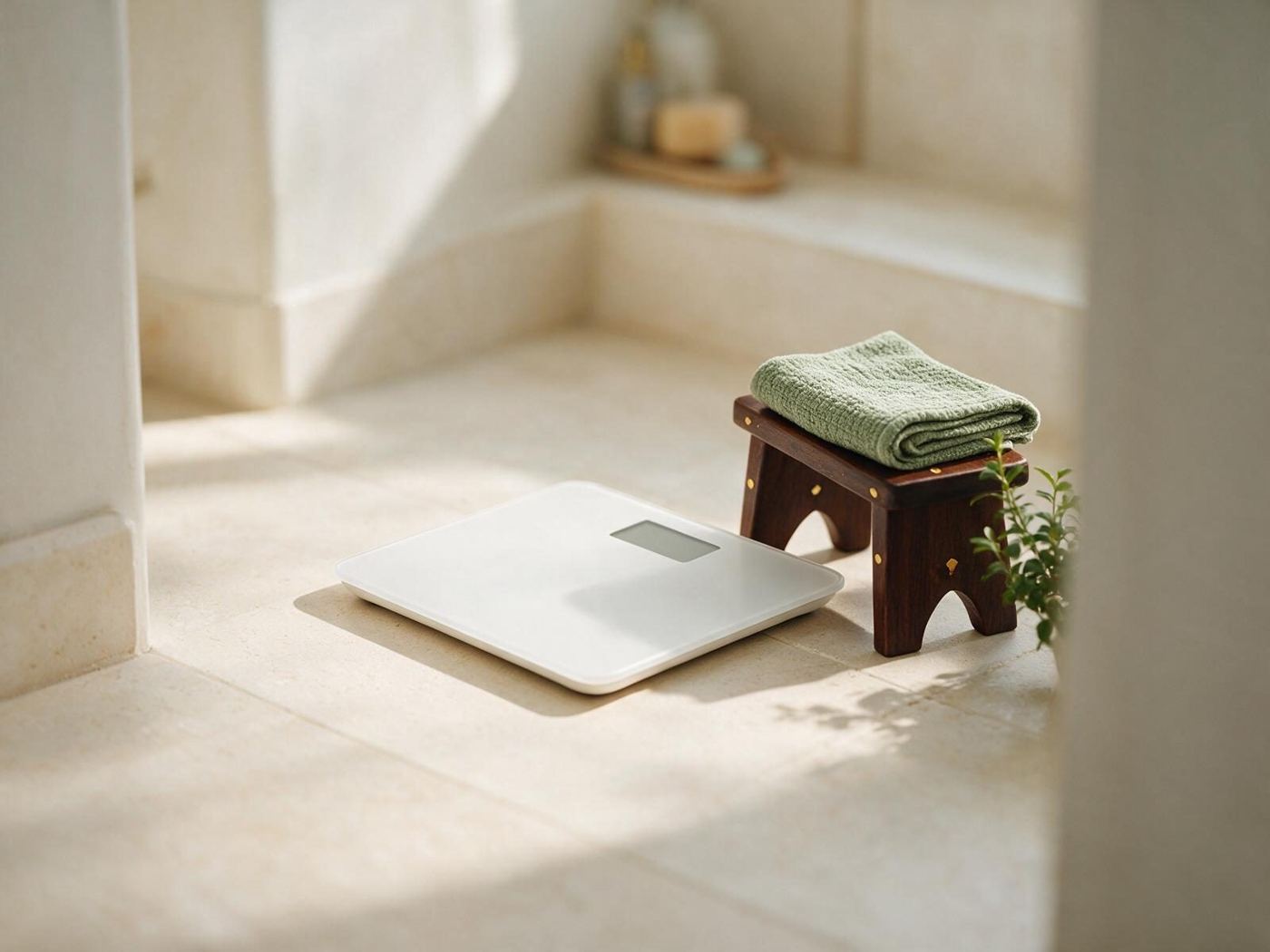
Smart scales promise a lot: weight, body fat, muscle, water, even "body age". How much of that can you trust?
Weight: usually close
A 2021 observational study compared three consumer smart scales with DEXA, the hospital scan used as a reference for body composition. The scales measured weight closely. For tracking your weight trend at home, a decent smart scale is a good tool.
Body fat: an estimate, not a fact
The same study found the scales were not accurate enough for body composition and should not replace DEXA. Fat mass was usually underestimated, and muscle readings were inconsistent.
Other studies show a similar picture. Results vary a lot between devices and between people. A study of a high-frequency analyser in Korean adults found good agreement with DEXA, but that device was not a typical bathroom scale. Readings are also less reliable for very lean or very muscular people, because the formulas were built on general populations.
Why body fat readings jump
Home scales estimate body fat by sending a tiny current through your feet. Water carries the current, so anything that changes your water, such as a workout, a salty meal or a drink, changes the estimate. That is why your "body fat" can move by a whole percentage point overnight.
How to use your scale well
- Trust weight, watch the trend.
- Read body fat as a direction over weeks, not an exact number.
- Weigh in the same way each time: morning, bare dry feet, before food or exercise.
- Add a tape measure. Waist size is simple and often tells you more than a body-fat percentage.
How Evenly handles this
Evenly always labels body fat as an estimate and writes "about" in front of it. You can switch body fat off completely. We never use it to judge you.
Sources
- Accuracy of Smart Scales on Weight and Body Composition: Observational Study, 2021. ncbi.nlm.nih.gov/pmc/articles/PMC8122302
- A Comparative Study of High-Frequency Bioelectrical Impedance Analysis and DEXA, 2022. ncbi.nlm.nih.gov/pmc/articles/PMC9323664
This article is general information, not medical advice.
General information, not medical advice. Check with a healthcare professional about your own situation.